.png)
The Day Pride Met Compassion
- Chabad Food Bank - Manchester
- Feb 12
- 3 min read


Esther always loved the start of a new term.
There was something hopeful about it — freshly sharpened pencils, neatly labelled exercise books, uniforms laid out the night before. Even when money was tight, she made sure her three children walked into school feeling prepared and proud.
But this year felt different.
Over the summer, Esther’s hours at the care home had been reduced. “Temporary,” they had said. “Just budget adjustments.” She tried not to panic. Her husband, Daniel, worked as a delivery driver, picking up extra shifts whenever he could. They had always managed before. Somehow.
Then Daniel’s van broke down.
At first, it seemed like a simple repair. But simple turned into complicated. Complicated turned into costly. Within two weeks, Daniel was out of work completely. No van meant no deliveries. No deliveries meant no income.
They told the children it was “just a little bump.”
But bumps don’t usually come with final notices and red letters.
By the time September arrived, Esther stood in her children’s bedroom holding their uniforms — and felt her heart sink.
Leah’s skirt was now too short. Ari’s blazer sleeves stopped awkwardly above his wrists. Moshe’s school shoes had a hole beginning to form near the sole.
They had grown over the summer. Children do that.
There was no money for replacements.
Esther did the maths over and over again at the kitchen table late at night. If they skipped paying one bill… if they reduced the food shop even further… if they stretched the pasta for another week…
But the numbers would not stretch.
The first morning of term was one of the hardest of her life.
Leah stood in front of the mirror, tugging her skirt down.“Mummy, it looks silly,” she whispered.
Ari said nothing, but he kept pulling at his sleeves. Moshe asked if he could wear trainers instead of his worn shoes — “just for today.”
Esther smiled brightly. Too brightly. “You all look wonderful,” she insisted, her voice steady while her stomach churned.
After the school run, she didn’t go straight home.
Instead, she sat in the car and cried.
Not because of the clothes. Not really.
Because she felt she was failing at the small things — the ordinary, everyday things that make children feel secure.
That afternoon, a message came from a friend she hadn’t spoken to in weeks.
“I heard Daniel’s van is off the road. Have you spoken to L’Chaim?”
Esther hesitated.
They weren’t “that kind” of family. They worked. They tried. They managed.
But managing had quietly turned into drowning.
Making the call felt like swallowing pride. But the voice on the other end was warm. Calm. Understanding. No judgement. Just practical questions and gentle reassurance.
Within days, everything shifted.
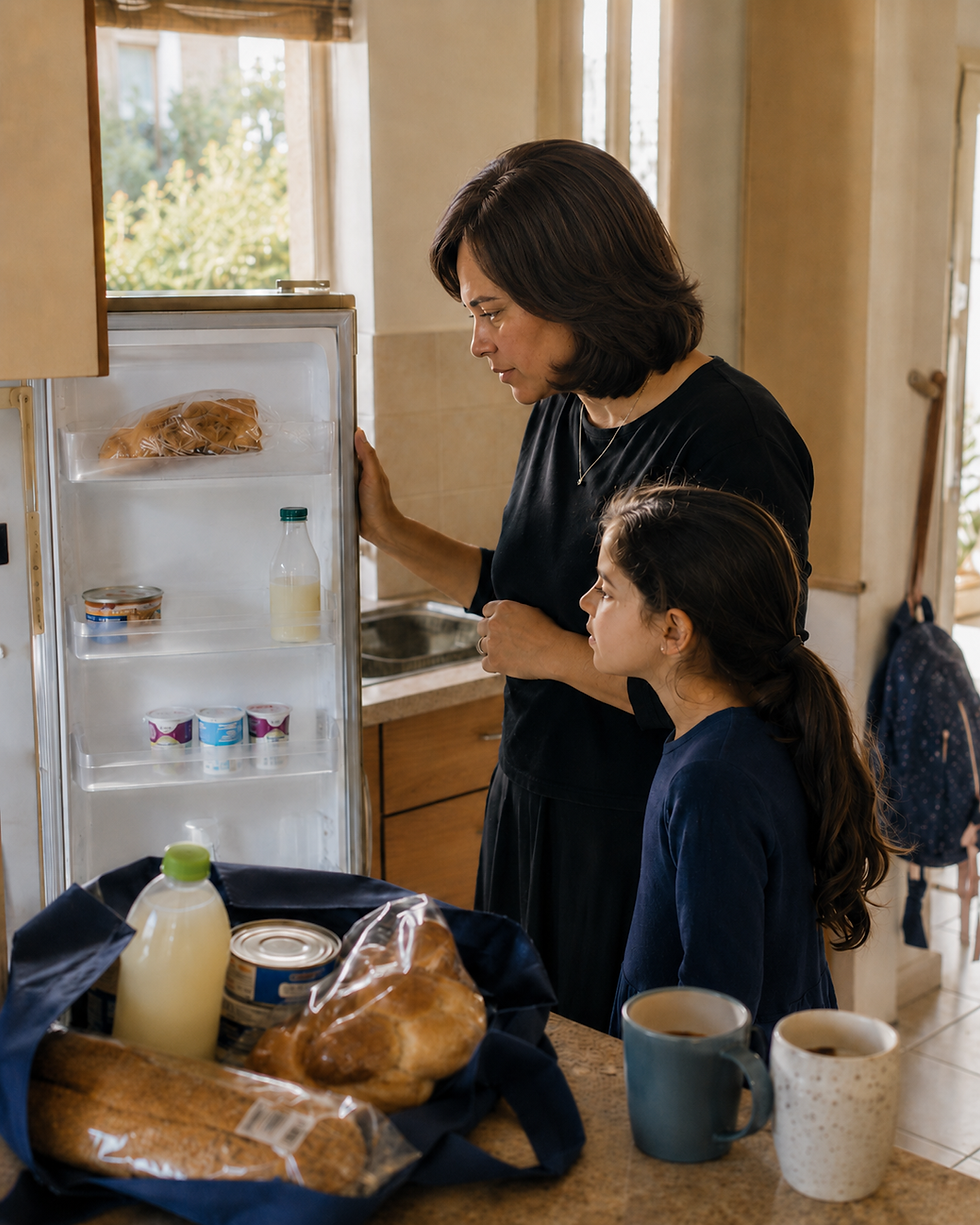
A food parcel was provided— enough to refill cupboards that had grown painfully bare. Fresh products. Pantry staples. Challah for Shabbos.
But that wasn’t all.
Through the L’Chaim Clothes Bank, perfectly sized school uniforms were provided. A smart blazer for Ari. A longer skirt for Leah. Proper sturdy shoes for Moshe. Even spare shirts “just in case.”
When the children tried them on, the transformation wasn’t just physical.
Leah twirled in front of the mirror. Ari stood taller. Moshe stomped proudly around the kitchen in his new shoes.
That Friday night, the table was set properly again. There was food. There was calm. There was laughter Daniel hadn’t managed in weeks.
By mid-winter, Daniel had managed to secure temporary agency work — not as stable as before, and not enough yet to clear the backlog of bills — but enough to begin rebuilding. The van had long since been sold to cover urgent expenses, and he now travels by bus across Manchester for shifts that change week to week.
Life is still fragile. The debts haven’t disappeared overnight. Every pound is still carefully counted. But the crisis no longer feels suffocating.
Because when the cupboards were empty, and the uniforms didn’t fit, L’Chaim Foodbank stepped in — quietly restoring not just meals, but dignity. Not just clothing, but confidence.
Sometimes the difference between despair and hope is a single phone call.
And sometimes, the greatest kindness is helping a parent feel like a parent again.
RECENT FEEDBACK
“Reaching out was the hardest part. I kept thinking others needed the help more than we did. But the kindness we received — without judgement, without hesitation — reminded us that needing support doesn’t mean you’ve failed. It means you’re human.” – CP
“I didn’t realise how much stress I was carrying until someone helped lift it. L’Chaim didn’t just provide food and clothing. They gave my children back their confidence and gave me back my peace of mind.” – ES


Comments